The Highest Offer Isn’t Always the Best: How Virginia Sellers Choose the Right Bid
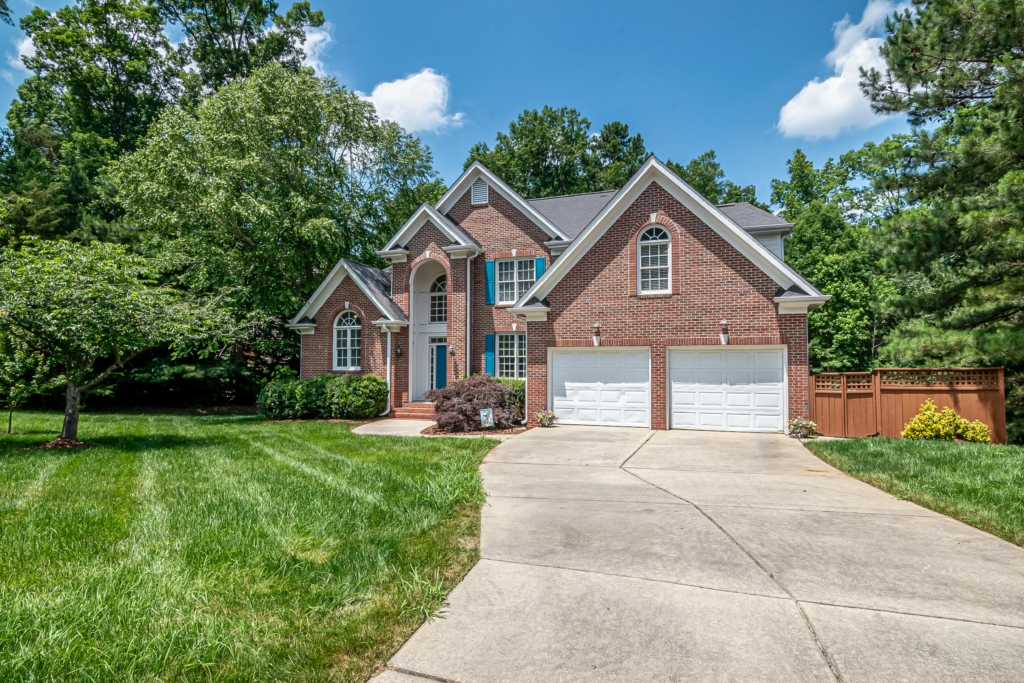
In the spring of 2025, a Northern Virginia homeowner in McLean turned down a $1.42 million cash offer — the highest bid on the table by $40,000 — and instead accepted a lower proposal from a buyer who could close in 21 days, waived the inspection contingency, and offered a flexible leaseback period. As a result, six weeks later the seller had already moved, deposited funds, and was under contract on their dream home in Richmond. The losing bidder, however, was still searching. That’s the Virginia real estate market in 2026: fast, nuanced, and completely unforgiving of sellers who chase a number without reading the full picture. Moreover, as inventory tightens and buyer competition intensifies across the Commonwealth, understanding how to evaluate an offer in its entirety has become one of the most valuable skills a Virginia seller can develop.
Virginia’s Market Is Playing a Different Game
Virginia’s residential real estate landscape spans an extraordinary range of submarkets. From the hyper-competitive Northern Virginia corridor anchored by Fairfax, Arlington, and Loudoun Counties to the steadily appreciating coastal communities of Virginia Beach and Chesapeake, and on to the revitalized urban core of Richmond — each market plays by slightly different rules. Nevertheless, they all share one defining characteristic in 2026: speed. According to Virginia Realtors, median days on market across the Commonwealth have compressed to just 9 days in high-demand ZIP codes, with 63% of listings receiving multiple offers within the first 72 hours of going live.
Consequently, this velocity creates a paradox that seasoned sellers frequently encounter: the more competitive the market, the more confusing the offer stack becomes. Furthermore, when five bids land in a 48-hour window — each with different prices, contingency structures, financing types, and closing timelines — the instinct to simply pick the top number becomes not just tempting, but potentially catastrophic. Indeed, as we have covered in our deep-dive on how buyers compete in Virginia’s fastest spring market, the dynamics that create urgency for buyers are the very same forces that demand greater discernment from sellers.
“Price is what you’re offered. Value is what actually reaches the closing table — and in Virginia, those two figures are rarely the same.”
The Anatomy of a Winning Offer vs. a Risky One
The real estate industry has long relied on the National Association of Realtors’ annual Profile of Home Buyers and Sellers as a benchmark for understanding transaction dynamics. What that data consistently reveals — and what Virginia’s active market validates year after year — is that non-price terms are the quiet architects of whether a deal actually closes. To illustrate this point: a structurally weak offer at $50,000 above list price is still a serious liability if it’s contingent on the buyer selling their current home in a slow market, requires a 60-day closing period, and is financed through a lender with a history of appraisal delays.
By contrast, a slightly lower offer backed by cash, a tight closing window, and minimal contingencies can deliver dramatically more value to the seller in practice. Additionally, the hidden costs of a deal falling apart — re-listing, market re-entry, carrying costs, and lost time — often dwarf the difference between two competing bids. This is precisely why the danger of optimizing purely for price extends well beyond the moment of acceptance.
When the big number hides the danger
Extended or unspecified closing windows, financing contingencies tied to another sale, low earnest money deposits, and aggressive inspection demands can each independently derail a transaction — regardless of how impressive the offer price looks on paper.
What Virginia sellers actually bank on
Cash or conventionally pre-underwritten financing, a 15–21 day closing window, limited or waived contingencies, a robust earnest money deposit of 3% or more, and a seller-aligned leaseback or move-out date define a truly strong offer.
★ Recommended — Offer B delivers the strongest net outcome despite a $33K lower headline price. Green = Best | Amber = Acceptable | Red = Risk Flag
📌 Related: Thinking about listing this spring? See how Virginia sellers are pricing ahead of the market in 2026.
The Five Factors Virginia Sellers Must Evaluate Before Signing
Before accepting any offer, sellers should establish a structured evaluation framework. Working alongside an experienced Virginia agent — and referencing analytical tools such as Zillow Research and Redfin’s Data Center — sellers can build a reliable scorecard for every offer received. Below are the five factors that Remmoo agents apply when counseling Virginia sellers through competitive bid situations.
Financing Certainty and Pre-Underwriting Status
First and most critically, sellers must scrutinize the type and quality of the buyer’s financing. A pre-approval letter is a starting point, not a guarantee. In Virginia’s fast-moving markets — particularly in Loudoun County’s growth corridors and the Tysons–McLean belt — the difference between a standard pre-approval and a fully pre-underwritten commitment letter can mean the difference between a 21-day close and a deal that quietly evaporates weeks before settlement. Therefore, sellers should request documentation of lender type, pre-underwriting status, and the buyer’s debt-to-income profile where permissible.
Contingency Architecture: What the Buyer Needs to Walk Away
Next, sellers should map out the full contingency structure of each offer. Inspection contingencies, financing contingencies, appraisal gaps, and home-sale contingencies each represent a built-in exit ramp for the buyer. Fortunately, in Virginia sellers have the legal latitude to negotiate contingency terms, establish shorter resolution windows, and in many cases counter back with modified language. As a result, every contingency becomes a negotiating variable — not a fixed condition — and your agent should treat it accordingly. For deeper context, our guide on the complete home buying and selling process covers contingency structures in full detail.
Closing Timeline and Seller Life-Stage Alignment
Beyond price and contingencies, the closing timeline is often the deciding factor for sellers whose next move depends on a precise sequence of events. The ideal closing date is rarely the fastest one — rather, it is the one that aligns with where the seller is going next. For instance, a retiree downsizing from a Williamsburg colonial may need a 45-day window, while a dual-income couple relocating to Richmond for a corporate role may need to be out in 17 days. Ultimately, your timeline should drive the negotiation — not the buyer’s convenience by default.
Earnest Money: The Buyer’s True Skin in the Game
Meanwhile, earnest money remains one of the clearest signals of buyer seriousness. In Virginia’s competitive submarkets, a motivated buyer pursuing a $750,000 property in Arlington typically offers between $15,000 and $30,000 in earnest money — roughly 2% to 4% of the purchase price. On the other hand, deposits below 1.5% from a financed buyer in a multiple-offer situation represent a quiet but meaningful yellow flag. Sellers should discuss earnest money thresholds explicitly with their agent before accepting any terms. It’s also worth noting that what serious buyers want in 2026 has evolved, and their earnest money behavior reflects that shift.
The Appraisal Gap Clause: Virginia’s Most Underused Seller Protection
Finally, when a buyer offers above list price, there is always a risk that the property does not appraise at the contract value. This challenge is particularly acute in neighborhoods with limited comparable sales — a common reality in historic districts from Alexandria’s Old Town to Staunton’s downtown residential corridors. Consequently, an appraisal gap coverage clause — in which the buyer commits in writing to cover the difference between the appraised value and the contract price, up to a defined ceiling — is one of the most powerful protections a Virginia seller can secure. Without it, even the highest offer on the table can unravel entirely at the appraisal stage.
What the Virginia Legal Framework Means for Your Decision
Virginia operates as an attorney-optional but agent-essential real estate state. Although legal counsel is not mandatory at closing, the structuring of a purchase agreement and any subsequent addenda carries genuine legal weight. The Virginia Department of Professional and Occupational Regulation (DPOR) governs all licensed real estate activity in the Commonwealth. Because of this, disclosure requirements mean that sellers must evaluate every material term of an offer — not just the price — with full awareness of their legal obligations before signing.
This is precisely where the right real estate partner becomes irreplaceable. Rather than simply presenting a stack of offers and leaving the choice to the seller, a knowledgeable Virginia agent builds a net-proceeds model for each bid, stress-tests every contingency scenario, assesses the buyer’s lender track record, and delivers a ranked recommendation that accounts for both financial and non-financial variables. In short, the goal is not to find the most impressive number on paper — it is to find the most reliable path to a closed, funded transaction on the seller’s terms. As we explored in our article on why a house not selling in 48 hours isn’t always a problem, strategic patience and informed decision-making consistently outperform reactive, price-first thinking.
“In Northern Virginia, sellers who optimize for deal certainty — not just sale price — routinely net more at the closing table than those who chase the top bid.”
Key Takeaway: A $20,000 higher offer with a shaky financing structure, a 60-day closing window, and no appraisal gap protection can easily cost you more than that difference in holding costs, re-listing fees, and market re-entry risk. Therefore, always evaluate the full net picture — not just the headline number.
🏠 Also on Remmoo: Planning to buy in the same market? Read our guide on winning a home in Richmond’s 7-day market.
Virginia Submarkets Where This Dynamic Matters Most
Northern Virginia — particularly the I-495 and Route 7 corridors — remains the epicenter of competitive bidding dynamics across the Commonwealth. Here, federal employment stability and proximity to Washington, D.C. drive sustained demand from buyers with exceptional purchasing power. Moreover, sellers in these markets frequently field offers from DoD contractors, federal agency employees, and tech sector professionals, all arriving with aggressive strategies and substantial cash reserves. Given this environment, the structural integrity of every offer is paramount. Sellers in Fairfax County, in particular, should review our dedicated resource on navigating Fairfax County’s real estate landscape before entering any negotiation.
Richmond’s Fan District and Scott’s Addition tell a different but equally compelling story. These neighborhoods have become Virginia’s most dynamic urban real estate environments of the decade, attracting a younger, creative-class buyer profile. However, this demographic often comes with fewer liquid reserves, which makes contingency structures and earnest money levels especially critical evaluation points for sellers. Additionally, the rapid pace of appreciation in these ZIP codes means that appraisal gap risks are more pronounced than in more established suburban corridors. For sellers navigating Richmond specifically, our detailed breakdown of Richmond’s hyper-fast sub-$450K market provides essential context.
In Virginia Beach and Chesapeake, the picture shifts again. Military buyer populations — supported by VA loan financing administered through the U.S. Department of Veterans Affairs — constitute a significant and structurally unique share of the market. Although VA loans carry specific appraisal requirements and buyer protections that can seem complex to sellers at first glance, they are frequently backed by some of the most reliable, mission-driven buyers in the Commonwealth. Furthermore, the presence of military relocation timelines means these buyers often have non-negotiable closing windows — which, interestingly, can work in the seller’s favor when their own timeline aligns. Our guide to the 2026 PCS season and military home buying in Hampton Roads is essential reading for any seller operating in this market.
How to Build Your Offer Evaluation Scorecard
Given the complexity of a competitive offer environment, sellers benefit enormously from approaching the evaluation process with a written scorecard rather than relying on gut instinct. Specifically, this means assigning weighted scores to each of the five factors covered above — financing, contingencies, timeline, earnest money, and appraisal gap coverage — and then calculating a total for each offer before any discussion of acceptance begins. As a practical starting point, consider weighting financing certainty and contingency structure most heavily, since these two factors account for the majority of transaction failures in Virginia’s market.
Beyond the scorecard itself, sellers should also factor in what might be called “buyer intent signals.” These include how quickly the buyer submitted their offer, whether their agent is known and communicative, and whether the offer letter includes any personal context about the buyer’s connection to the property. While none of these soft signals should override hard financial analysis, they can provide valuable tie-breaking insight when two offers score nearly identically on the structured criteria. Ultimately, the sellers who navigate Virginia’s competitive market most successfully are those who treat offer evaluation as a process — not a moment.
Pro Tip: Ask your agent to prepare a net proceeds estimate for each offer. In many cases, a $15,000 difference in price disappears entirely once you account for differences in closing cost contributions, leaseback value, and the probability-adjusted risk of each offer falling through before closing.
The Bottom Line for Virginia Sellers in 2026
The Virginia real estate market in 2026 rewards sellers who think like strategists, not auctioneers. While the instinct to accept the highest dollar amount is entirely understandable, the data and the experience of thousands of Virginia transactions tell a consistent story: the best offer is not always the biggest one. Instead, it is the one most likely to close on time, on terms that work for the seller, with a buyer whose commitment is backed by something more than an impressive number. Consequently, sellers who invest the time to evaluate offers holistically — with the right agent, the right framework, and a clear understanding of their own goals — consistently achieve better outcomes, both financially and in terms of the experience itself.
As Virginia’s market continues to evolve, moreover, this kind of informed seller strategy will only become more important. Whether you’re listing in Northern Virginia’s hyper-competitive suburbs, Richmond’s dynamic urban core, or the military-influenced coastal markets of Hampton Roads, the principles remain the same. Know your priorities. Evaluate your offers. And trust a partner who understands that the path to the closing table matters just as much as the price printed at the top of the page.
Ready to Sell Smart in Virginia?
Remmoo’s Virginia market specialists provide offer-by-offer analysis, net proceeds modeling, and transaction strategy tailored to your ZIP code, your timeline, and your goals.